


About us
The Name Brčko
Geographical Position and Transport Connectivity
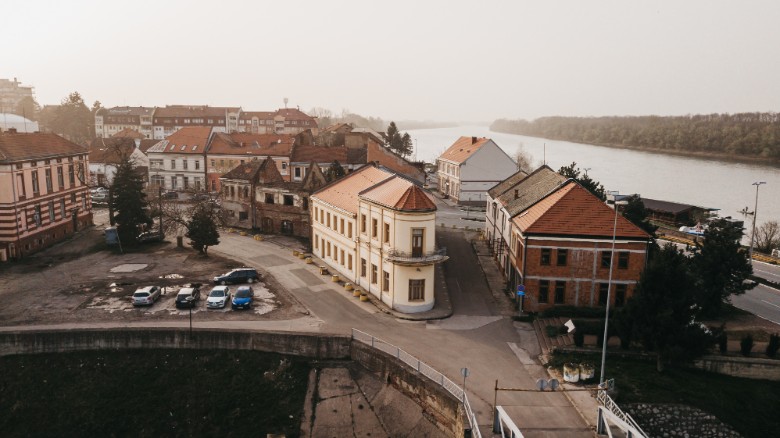
The Brčko District of Bosnia and Herzegovina is geographically located in the north-eastern part of Bosnia and Herzegovina, on the right bank of the Sava River. It lies at the meeting point of Bosnia and Herzegovina, Serbia and Croatia and represents an important crossroads of national and international routes running from east to west and from north to south. The District covers an area of 493.3 km², which represents less than 1% of the total area of Bosnia and Herzegovina (51,129 km²), while the central urban area covers 183 km². With such a position, Brčko has a favourable tourism and geographical location, connecting Bosnia and Herzegovina with western and south-eastern Europe as well as the Danube region. As an important junction of major transport routes in the east–west and north–south directions, Brčko represents a multimodal transport hub in Bosnia and Herzegovina, combining road, river and railway transport. Through these connections, the District has access to Croatia and Central Europe, while the navigable Sava River further connects it to the Danube and onward to both Western and Eastern Europe. The spatial position of Brčko therefore determines the connectivity of its wider hinterland and gravitational area with other regions of Central and Eastern Europe.
The city of Brčko is located only 30 kilometres from the international transport route of the Pan-European Corridor X (the Belgrade–Zagreb motorway). This motorway (E70) runs from Salzburg in Austria to Thessaloniki in Greece and is characterized by heavy traffic throughout the year, transporting a significant number of passengers and enabling good connectivity between the Brčko District and major tourism-generating markets. The Brčko District of Bosnia and Herzegovina lies on a navigable section of the Sava River, and the Port of Brčko is the largest river port in Bosnia and Herzegovina. The working quay of the port is 150 metres long and has an average width of 15 metres. Within the territory of the Brčko District, the Sava River is navigable over a distance of 44 kilometres. Vessels with a draught of up to 2.5 metres can navigate the river for around 260 days per year, while during periods of low water levels it remains navigable for vessels with a smaller draught. Through the Sava River, the Brčko District is connected to the Danube, which further links it with the rest of Europe, the Baltic Sea and the North Sea, while through the Black Sea it is connected to the Mediterranean. The Port of Brčko has traditionally served as a transhipment port for bulk cargo and does not have a passenger terminal. However, each year an increasing number of cruise ships enter the Brčko District, creating opportunities for the development of river cruise and nautical tourism. The port represents an important infrastructure facility that could significantly improve transport accessibility and further stimulate tourism development in the Brčko District, particularly in light of plans to extend the navigability of the Sava River to Brežice in Slovenia, which would increase the navigable waterway by approximately 100 kilometres.
Culture and heritage
For centuries, different cultures and traditions have intertwined in Brčko, while various civilizations have left their mark, including Illyrian, ancient, Roman, Byzantine and Slavic traditions. Many customs inherited from these periods have been preserved to this day through the work of cultural and artistic associations, organizations and institutions active in the field of culture.
Cultural and historical heritage is an essential part of the identity of a particular area, but in modern systems it is also recognized as a powerful driver of economic development and tourism. Culture, understood in its broadest sense, today represents an important component of tourism in many developed countries.
Experts believe that the future of tourism in the upcoming period will increasingly rely on offers based on all segments of culture, as what is authentic, original and unique always represents a strong attraction. For this reason, many countries today invest significant resources in culture and cultural heritage, thereby strengthening their overall tourism potential.
Follow us to stay up to date with our projects, events and news as we build together bright tourist future of Brčko District!